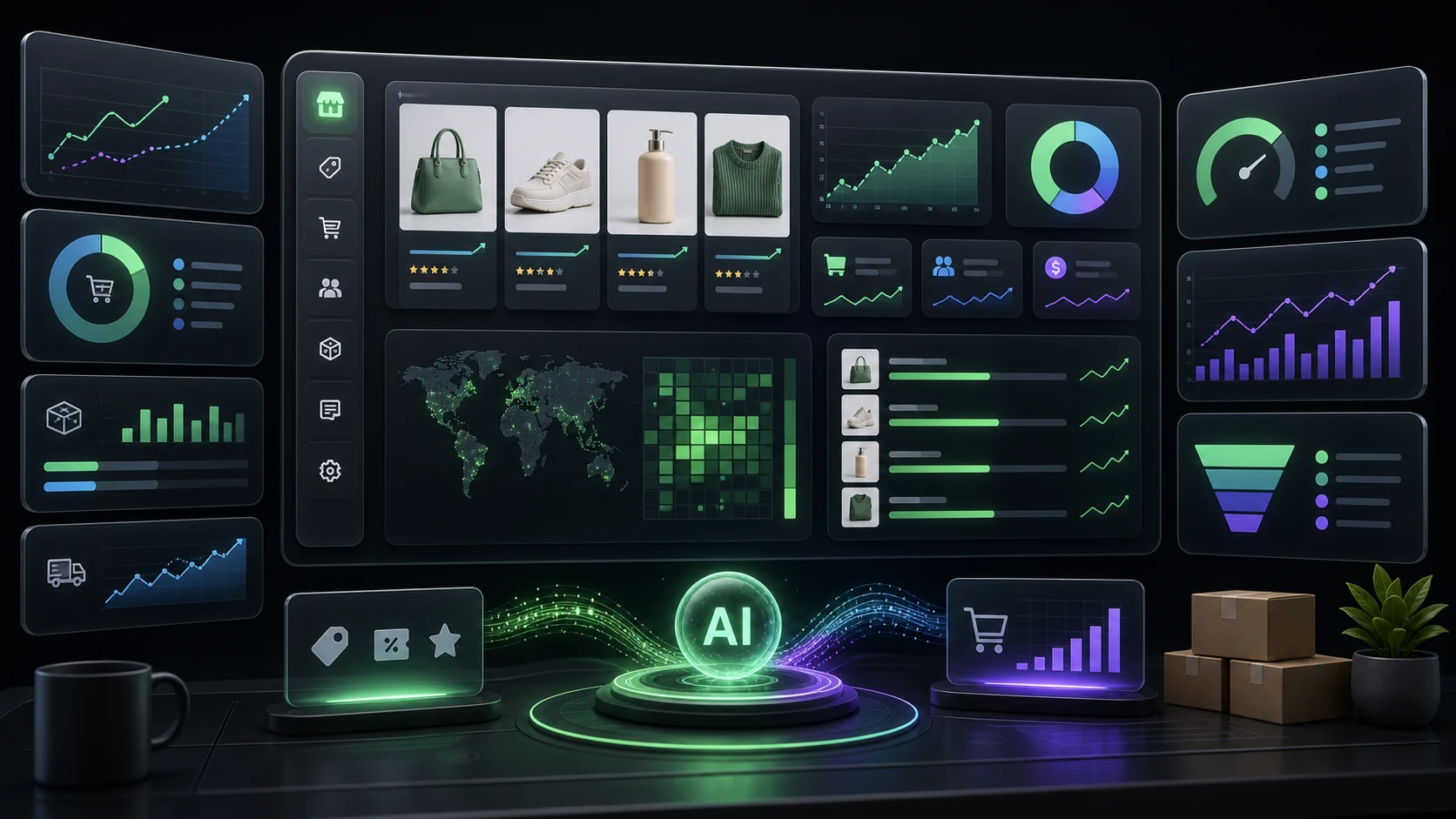
Shopify store owners are sitting on a goldmine of data that can transform their business – but most don't know how to tap into it. AI-powered analytics for Shopify stores goes beyond basic reporting to provide predictive insights, automated optimizations, and intelligent recommendations that can dramatically increase revenue and profitability.
The Hidden Power of Shopify Data
Every Shopify store generates massive amounts of data:
- Customer behavior patterns across all touchpoints
- Product performance metrics and trends
- Sales data with detailed attribution
- Inventory movements and demand signals
- Marketing campaign effectiveness across channels
- Customer service interactions and feedback
Traditional analytics tools show you what happened. AI analytics tells you what's going to happen and what to do about it.
Key AI Analytics Capabilities for Shopify Stores
1. Predictive Customer Analytics
Customer Lifetime Value (CLV) Prediction:
- Identify high-value customers early
- Predict future purchase behavior
- Optimize acquisition spending
- Personalize customer experiences
Churn Prediction and Prevention:
- Identify at-risk customers before they leave
- Implement automated retention campaigns
- Optimize customer service touchpoints
- Increase customer loyalty and retention
Purchase Intent Scoring:
- Predict which visitors are likely to buy
- Optimize product recommendations
- Personalize marketing messages
- Increase conversion rates
2. Intelligent Inventory Management
Demand Forecasting:
- Predict future product demand
- Optimize inventory levels
- Reduce stockouts and overstock
- Improve cash flow management
Seasonal Trend Analysis:
- Identify seasonal patterns
- Optimize inventory for peak periods
- Plan marketing campaigns
- Maximize seasonal revenue
Product Performance Prediction:
- Identify winning products early
- Predict product lifecycle stages
- Optimize product mix
- Reduce dead inventory
3. Conversion Optimization
Abandoned Cart Recovery:
- Predict cart abandonment likelihood
- Optimize timing of recovery emails
- Personalize recovery messages
- Increase cart completion rates
Pricing Optimization:
- Analyze price sensitivity
- Optimize pricing strategies
- Predict competitor responses
- Maximize profit margins
Product Recommendation Engine:
- Analyze customer preferences
- Recommend relevant products
- Increase average order value
- Improve customer satisfaction
4. Marketing Intelligence
Campaign Performance Prediction:
- Predict campaign success before launch
- Optimize marketing spend allocation
- Identify best-performing channels
- Maximize marketing ROI
Customer Segmentation:
- Automatically segment customers
- Personalize marketing messages
- Optimize targeting strategies
- Improve campaign effectiveness
Attribution Analysis:
- Track complete customer journeys
- Understand multi-touch attribution
- Optimize marketing mix
- Improve budget allocation
Implementation Framework for Shopify AI Analytics
Phase 1: Data Foundation (Week 1-2)
Data Integration:
- Connect Shopify store data
- Integrate marketing platforms (Facebook, Google, etc.)
- Connect customer service tools
- Set up inventory management systems
Data Quality Assessment:
- Audit existing data sources
- Identify data gaps
- Implement data validation
- Set up data governance
Key Data Points to Track:
- Customer demographics and behavior
- Product catalog and performance
- Sales transactions and returns
- Marketing campaign data
- Inventory levels and movements
Phase 2: AI Model Development (Week 3-4)
Customer Analytics Models:
- Customer lifetime value prediction
- Churn prediction algorithms
- Purchase intent scoring
- Customer segmentation
Product Analytics Models:
- Demand forecasting
- Pricing optimization
- Product recommendation engines
- Inventory optimization
Marketing Analytics Models:
- Campaign performance prediction
- Attribution modeling
- Customer acquisition cost optimization
- Channel effectiveness analysis
Phase 3: Implementation and Optimization (Week 5-6)
Dashboard Creation:
- Real-time analytics dashboards
- Predictive insights visualization
- Automated alert systems
- Mobile-friendly interfaces
Automation Setup:
- Automated email campaigns
- Dynamic pricing updates
- Inventory alerts
- Marketing optimization
Testing and Validation:
- A/B testing frameworks
- Performance monitoring
- Model accuracy validation
- Continuous improvement
Industry-Specific AI Applications
Fashion and Apparel
Trend Forecasting:
- Predict fashion trends before they peak
- Optimize inventory for seasonal changes
- Identify emerging style preferences
- Plan collection launches
Size and Fit Optimization:
- Analyze return patterns by size
- Optimize size recommendations
- Reduce returns and exchanges
- Improve customer satisfaction
Color and Style Analysis:
- Predict color preferences
- Optimize product variations
- Identify best-performing styles
- Plan product development
Electronics and Tech
Product Lifecycle Management:
- Predict product obsolescence
- Optimize inventory clearance
- Plan new product launches
- Maximize product profitability
Technical Support Intelligence:
- Predict support ticket volume
- Identify common issues
- Optimize support resources
- Improve customer experience
Warranty and Returns Analysis:
- Predict warranty claims
- Optimize return policies
- Identify quality issues
- Improve product development
Health and Beauty
Personalization Engine:
- Recommend products based on skin type
- Analyze ingredient preferences
- Optimize product formulations
- Increase customer satisfaction
Subscription Optimization:
- Predict subscription churn
- Optimize delivery timing
- Personalize product selections
- Increase subscription value
Seasonal Demand Planning:
- Predict seasonal trends
- Optimize inventory for holidays
- Plan marketing campaigns
- Maximize seasonal revenue
Advanced AI Analytics Features
Real-Time Personalization
Dynamic Content Optimization:
- Personalize homepage content
- Optimize product recommendations
- Customize marketing messages
- Improve user experience
Behavioral Trigger Automation:
- Automated email sequences
- Personalized discount offers
- Targeted product recommendations
- Dynamic pricing strategies
Predictive Customer Service
Proactive Support:
- Predict customer issues
- Automate problem resolution
- Optimize support resources
- Improve customer satisfaction
Sentiment Analysis:
- Analyze customer feedback
- Monitor brand sentiment
- Identify service gaps
- Improve customer experience
Competitive Intelligence
Market Analysis:
- Monitor competitor pricing
- Track market trends
- Identify opportunities
- Optimize competitive strategy
Product Intelligence:
- Analyze competitor products
- Identify market gaps
- Optimize product positioning
- Plan product development
Measuring Success and ROI
Key Performance Indicators
Revenue Metrics:
- Revenue growth rate
- Average order value increase
- Customer lifetime value improvement
- Repeat purchase rate
Efficiency Metrics:
- Conversion rate optimization
- Cart abandonment reduction
- Inventory turnover improvement
- Marketing ROI increase
Customer Metrics:
- Customer satisfaction scores
- Net Promoter Score (NPS)
- Customer retention rate
- Customer acquisition cost
Expected Results
Shopify stores using AI analytics typically see:
- 15-25% increase in conversion rates
- 20-30% improvement in customer retention
- 10-20% reduction in inventory costs
- 25-35% increase in marketing ROI
- 15-25% growth in average order value
All-in-One AI Analytics Platforms
- Klaviyo (Email and SMS marketing)
- Yotpo (Reviews and loyalty)
- Gorgias (Customer service)
- Rebuy (Personalization)
Specialized Shopify AI Tools
- Privy (Conversion optimization)
- Searchspring (Search and merchandising)
- Nosto (Personalization)
- Dynamic Yield (Optimization)
Business Intelligence Platforms
- Tableau with Shopify connector
- Power BI with e-commerce templates
- Looker with retail analytics
- Google Analytics 4 with Enhanced Ecommerce
Implementation Best Practices
Start with High-Impact Use Cases
- Focus on conversion optimization first
- Implement customer segmentation
- Set up abandoned cart recovery
- Optimize product recommendations
Ensure Data Quality
- Implement proper tracking codes
- Validate data accuracy
- Set up data governance
- Monitor data quality continuously
Test and Iterate
- A/B test all optimizations
- Monitor performance metrics
- Continuously improve models
- Adapt to changing customer behavior
Maintain Customer Privacy
- Comply with GDPR and CCPA
- Implement privacy-by-design
- Provide transparency to customers
- Enable data control options
Common Challenges and Solutions
Challenge: Data Silos
Solution: Implement unified data integration platform
Challenge: Technical Complexity
Solution: Choose user-friendly, no-code AI solutions
Challenge: Limited Resources
Solution: Start with affordable, scalable platforms
Challenge: Changing Customer Behavior
Solution: Implement continuous learning algorithms
Challenge: Privacy Concerns
Solution: Use privacy-compliant, first-party data strategies
Future Trends in Shopify AI Analytics
Emerging Technologies
Voice Commerce Analytics:
- Analyze voice search behavior
- Optimize for voice shopping
- Predict voice commerce trends
- Integrate with smart speakers
Augmented Reality Integration:
- Analyze AR engagement
- Optimize virtual try-on experiences
- Predict AR adoption
- Improve product visualization
Blockchain Analytics:
- Track supply chain transparency
- Verify product authenticity
- Analyze sustainability metrics
- Improve brand trust
Advanced AI Capabilities
Emotion AI:
- Understand customer emotions
- Optimize emotional engagement
- Predict emotional responses
- Improve customer experience
Predictive Personalization:
- Predict future preferences
- Proactive product recommendations
- Anticipate customer needs
- Optimize customer journeys
Getting Started Checklist
Before You Begin:
- [ ] Audit your current Shopify analytics setup
- [ ] Identify key business objectives
- [ ] Assess available data sources
- [ ] Set budget and timeline
- [ ] Choose your AI analytics platform
Implementation Steps:
- [ ] Set up data integration
- [ ] Configure tracking and analytics
- [ ] Create initial customer segments
- [ ] Implement basic automation
- [ ] Set up performance monitoring
- [ ] Train your team on new tools
- [ ] Launch pilot campaigns
- [ ] Measure and optimize results
Conclusion
AI-powered analytics transforms Shopify stores from reactive businesses to proactive, data-driven success stories. By leveraging artificial intelligence to understand customers, predict trends, and optimize operations, Shopify store owners can achieve unprecedented levels of growth and profitability.
The key to success lies in:
- Starting with quality data and clear objectives
- Choosing the right AI tools for your specific needs
- Implementing gradually and testing continuously
- Focusing on customer privacy and experience
- Continuously learning and adapting to market changes
As AI technology continues to evolve, the Shopify stores that embrace these tools today will have a significant competitive advantage in the increasingly crowded e-commerce landscape. The question isn't whether to implement AI analytics, but how quickly you can start leveraging its power to grow your business.
Remember: AI analytics is not about replacing human intuition, but about augmenting it with data-driven insights that enable smarter, faster, and more profitable decisions. Start your AI analytics journey today and transform your Shopify store into a data-driven growth machine.