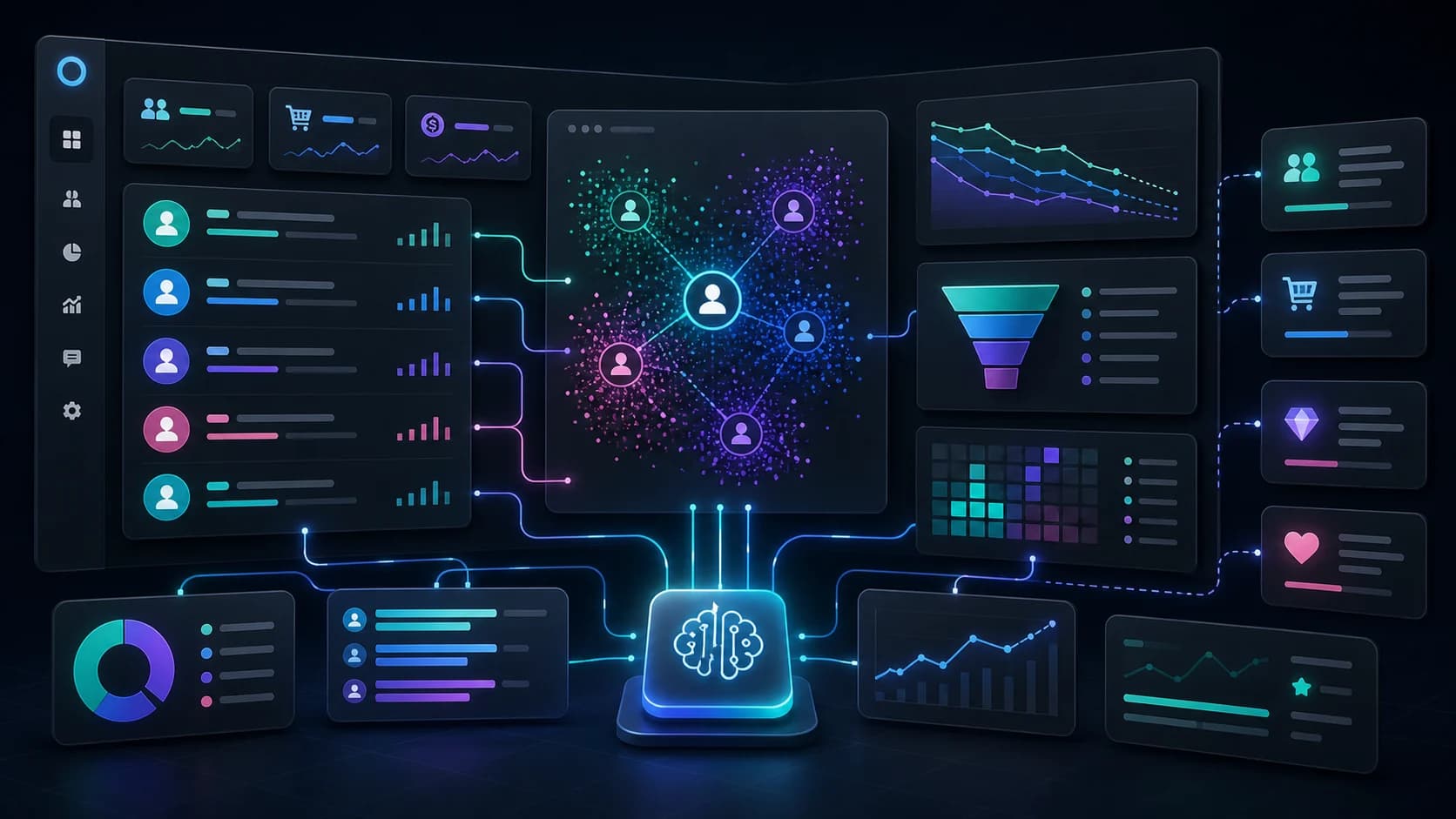
Customer analytics has evolved from simple demographic data to sophisticated AI-powered insights that can predict behavior, personalize experiences, and drive business growth. Today's successful businesses are leveraging AI automation to transform how they understand and engage with their customers.
The Evolution of Customer Analytics
Traditional customer analytics required manual data collection, complex spreadsheets, and weeks of analysis to generate basic insights. Modern AI-powered customer analytics delivers:
- Real-time customer insights updated continuously
- Predictive customer behavior modeling
- Automated segmentation based on behavior patterns
- Personalized recommendations at scale
- Proactive customer retention strategies
Key Benefits of AI-Powered Customer Analytics
1. Automated Customer Segmentation
AI algorithms can automatically group customers based on hundreds of variables, creating dynamic segments that update in real-time as customer behavior changes.
Traditional Approach: Static segments based on demographics AI Approach: Dynamic behavioral segmentation that adapts to customer actions
2. Predictive Customer Lifetime Value (CLV)
AI can calculate not just current customer value, but predict future value based on behavior patterns, purchase history, and engagement levels.
Impact: Prioritize high-value customers and optimize acquisition spending
3. Churn Prediction and Prevention
AI identifies customers at risk of leaving before they actually churn, enabling proactive retention efforts.
Early Warning Signs AI Detects:
- Decreased engagement rates
- Changed purchase patterns
- Reduced website/app usage
- Negative sentiment in communications
- Competitor research behavior
4. Personalized Customer Experiences
AI enables true 1:1 personalization by analyzing individual customer preferences, behavior, and context to deliver tailored experiences.
Core AI Customer Analytics Features
Behavioral Analytics
AI tracks and analyzes customer behavior across all touchpoints:
- Website navigation patterns
- Purchase timing and frequency
- Content engagement
- Customer service interactions
- Social media activity
Sentiment Analysis
AI analyzes customer communications to understand emotions and satisfaction levels:
- Email sentiment tracking
- Social media mention analysis
- Review and feedback processing
- Customer service conversation analysis
Predictive Modeling
AI creates models to predict future customer actions:
- Purchase probability
- Churn likelihood
- Upselling opportunities
- Cross-selling potential
- Optimal communication timing
Recommendation Engines
AI recommends products, content, and actions based on customer data:
- Product recommendations
- Content personalization
- Next-best-action suggestions
- Optimal channel selection
Implementation Strategies
Phase 1: Data Foundation (Weeks 1-2)
Set Up Data Collection:
- Implement comprehensive tracking across all customer touchpoints
- Integrate data from CRM, website, email, and social media
- Ensure data quality and consistency
Essential Data Points:
- Customer demographics
- Purchase history
- Website behavior
- Email engagement
- Customer service interactions
Phase 2: Basic AI Analytics (Weeks 3-4)
Implement Core Features:
- Automated customer segmentation
- Basic predictive models
- Real-time dashboards
- Automated reporting
Quick Wins:
- Identify top customer segments
- Predict customer churn
- Optimize email send times
- Personalize website experiences
Phase 3: Advanced AI Features (Weeks 5-8)
Deploy Advanced Analytics:
- Sophisticated predictive models
- Real-time personalization
- Automated marketing campaigns
- Advanced customer journey mapping
Advanced Capabilities:
- Dynamic pricing optimization
- Predictive inventory management
- Automated A/B testing
- Cross-channel orchestration
Industry-Specific Applications
E-commerce
- Dynamic Product Recommendations: AI analyzes browsing and purchase behavior to suggest relevant products
- Inventory Optimization: Predict demand by customer segment and season
- Abandoned Cart Recovery: Automated campaigns triggered by AI-detected abandonment patterns
SaaS Businesses
- Feature Usage Analytics: Identify which features drive retention and expansion
- Onboarding Optimization: Personalize onboarding based on user characteristics
- Expansion Opportunities: Predict which customers are ready for upgrades
Service Businesses
- Appointment Optimization: Predict no-shows and optimize scheduling
- Service Personalization: Tailor services based on customer preferences
- Retention Strategies: Identify at-risk customers and implement targeted retention
Measuring Success
Key Performance Indicators (KPIs)
Customer Understanding:
- Customer satisfaction scores
- Net Promoter Score (NPS)
- Customer effort score
- Sentiment analysis trends
Business Impact:
- Customer lifetime value increase
- Churn rate reduction
- Conversion rate improvement
- Revenue per customer growth
Operational Efficiency:
- Time to insight reduction
- Marketing efficiency improvement
- Customer service resolution time
- Automation rate increase
ROI Metrics
Most businesses see:
- 25-40% improvement in customer retention
- 15-30% increase in customer lifetime value
- 20-35% reduction in marketing costs
- 10-25% increase in conversion rates
Common Implementation Challenges
Challenge: Data Quality and Integration
Solution: Implement data validation processes and choose platforms with robust integration capabilities
Challenge: Privacy and Compliance
Solution: Ensure GDPR, CCPA compliance and implement privacy-by-design principles
Challenge: Team Training and Adoption
Solution: Invest in user-friendly platforms and comprehensive training programs
Challenge: Scaling Personalization
Solution: Start with high-impact use cases and gradually expand to more touchpoints
Customer Data Platforms (CDPs)
- Segment
- Salesforce Customer 360
- Adobe Experience Platform
- Treasure Data
AI Analytics Platforms
- Google Analytics Intelligence
- Adobe Analytics
- Mixpanel
- Amplitude
Specialized Customer Analytics Tools
- Klaviyo (Email marketing)
- Optimizely (Experimentation)
- Pendo (Product analytics)
- Zendesk (Customer service analytics)
Future Trends in AI Customer Analytics
Emerging Technologies
Real-Time Personalization: Instant adaptation based on current context and behavior
Predictive Customer Service: Anticipate customer needs and proactively address issues
Emotion AI: Understand customer emotions across all interactions
Cross-Channel Attribution: Complete view of customer journey across all touchpoints
Privacy-First Analytics
As privacy regulations evolve, AI customer analytics will need to:
- Operate with minimal data collection
- Provide transparent insights
- Respect customer privacy preferences
- Enable zero-party data strategies
Getting Started Checklist
Before You Begin:
- [ ] Define your customer analytics goals
- [ ] Audit your current data sources
- [ ] Assess your technical capabilities
- [ ] Set your budget and timeline
- [ ] Identify key stakeholders
Implementation Steps:
- [ ] Choose your AI customer analytics platform
- [ ] Set up data integration
- [ ] Configure basic segmentation
- [ ] Implement tracking and monitoring
- [ ] Train your team on new tools
- [ ] Start with pilot campaigns
- [ ] Measure and optimize results
Conclusion
AI-powered customer analytics represents a fundamental shift in how businesses understand and engage with their customers. By automating data collection, analysis, and activation, businesses can create more personalized experiences, improve customer satisfaction, and drive sustainable growth.
The key to success lies in starting with clear objectives, implementing gradually, and continuously optimizing based on results. As AI technology continues to advance, the businesses that embrace these tools today will have a significant competitive advantage in tomorrow's customer-centric marketplace.
Remember: The goal isn't just to collect more data, but to transform that data into actionable insights that improve customer experiences and drive business results. Start small, measure everything, and scale what works.